January 2026
Returning
It's been more than a decade since I last published a book and, if you'd told me back in 2013 that it would be this long before I published again, I think I would have sat down on the kitchen floor and cried. Actually, I probably did do that. More than once. As the years went by. It's not that I wasn't writing during those years, I was. Lots and often. But for whatever reason, I couldn't seem to shape any one story to 'the end'.
I used to feel ashamed of this gap. Like I'd failed some unspoken rule about productivity. Real writers publish regularly, they don't let a decade slip past without a book on the shelf. Except that it isn't true. Real writers are real people. And real people have lives and bills and admin and relationships and day jobs.
While this past decade hasn't been rich in terms of publishing for me, it has been one of the richest decades of my life and that can only be good for whatever books come next.
So here I am. Returning. I have a book coming out in 2027 that I've co-authored with Nerida under our name Belinda Newton and the YA novel I began writing in 2010 sometime has finally found its shape as Book 1 of a trilogy (or 2). I've sent it out, and waiting to hear.
Archive — 2021
December 2021
My Wonderful Nanna
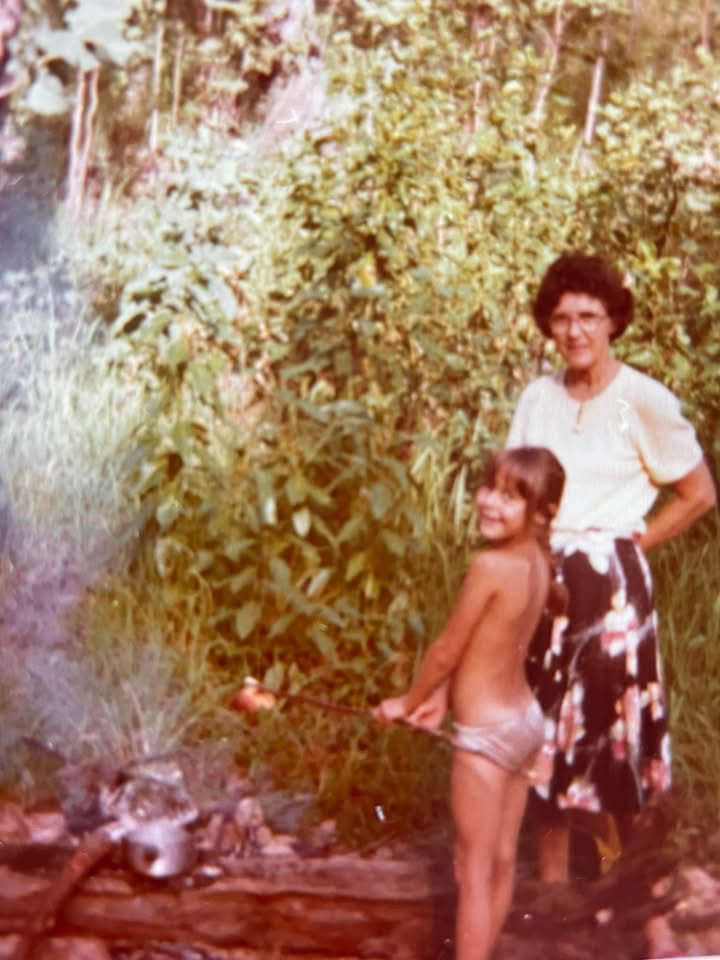
Yesterday we said farewell to my Wonderful Nanna who has been such a constant and joyous presence in my life. When I was six I flew from SA to the NT to have a holiday with her. We swam, cooked out, almost got swept off a bridge in flood, saw crocs. She had been promising me a trip to a fancy restaurant (I was such a princess who loved to dress up and feel special) so she said I could wear my best dress and we would to to the Seabreeze Hotel. I couldn't wait and was so excited as we drove there. We stopped, got out and walked to the seafront to sit on a park bench. She spread out her hands and said, 'Welcome to the Seabreeze Hotel.' I was ropable and she laughed and laughed. We did go somewhere lovely for dinner afterwards. And that holiday was so memorable elements of it wove themselves into my first novel. Which is fitting. Because my love of stories is due in no small part to her love of stories. It was such a privilege to deliver her eulogy.
Eulogy
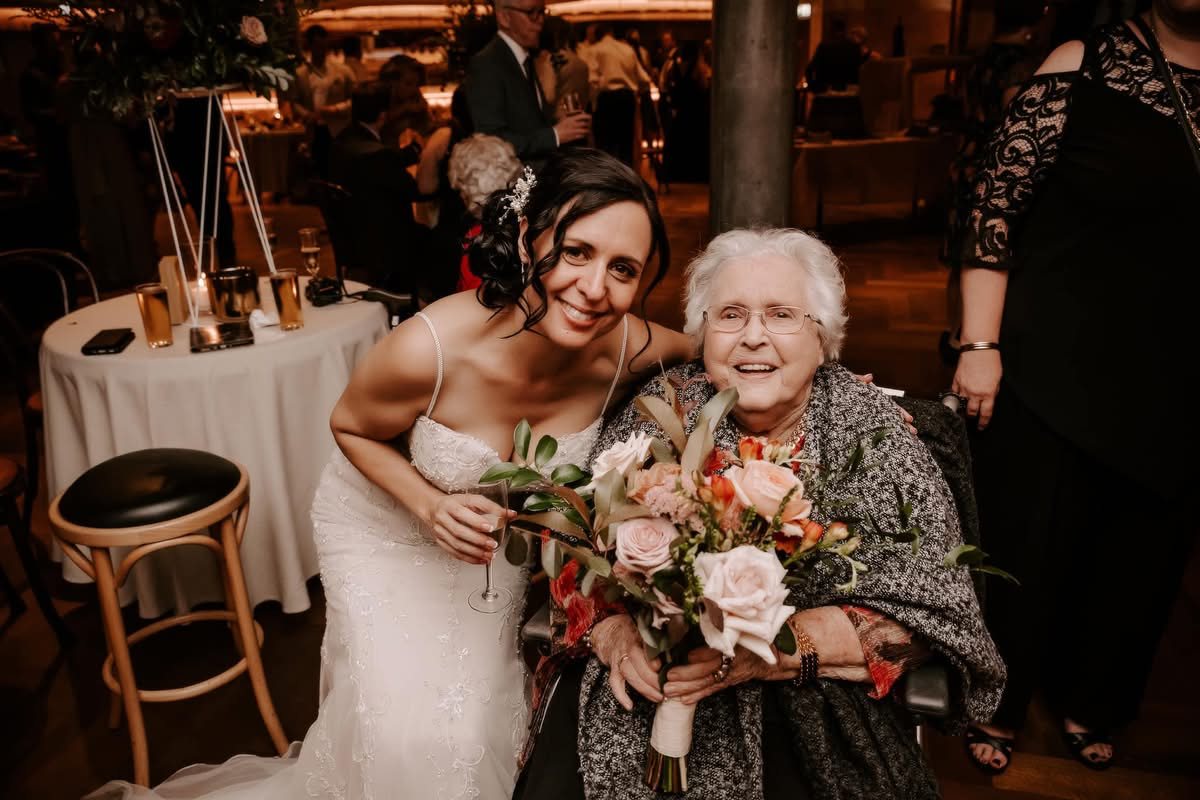
My nan was the best Nanna you could have had and she has been one of the most significant people in my life. You couldn't meet my Nan and not know, after a few minutes interaction, some of the greatest things about her. She was a talker, she most often spoke in stories, she loved getting a reaction, didn't hesitate to speak her mind, and was always very determined. Some of her other qualities were her resilience, her exuberance, her sense of adventure, her creativity and, of course, her sense of humour. And Nan channelled all of those characteristics, and her sheer force of will, towards the possibility of reaching 100; because her mind was as sharp as ever, and she never liked the thought of missing out on anything. Besides, 100 seemed a fitting age to be forever stamped beside the name of a woman who had lived the life she had. But 99 and one month…what an innings, as they say.
I think Nan's secret to such a long life, was the love and generosity she possessed, the bit of anger she always kept tucked away, which is useful motivation in the right circumstance, and never shying away from being just a tad cranky if the situation deserved it. To be fair, she should really be awarded an honorary decade for living through the many difficulties she faced in her life with such strength and focus. My Nan never gave up on anything or anyone without a fight. Including her own life. And though we will miss her dearly, and feel her loss deeply, it is a real joy knowing she died exactly the same way as she had lived; making gifts to the last moment—giving her daughter Marcia, directions about who was to get what—telling stories, laughing, complimenting people on what they were wearing—this could as easily have been a critique if an outfit had warranted it for she was unflinchingly honest (Belinda, she once said as I was about to go on a date early on with my now husband, don't wear your hair like that. It's too severe. Wear it down when you go to meet him).
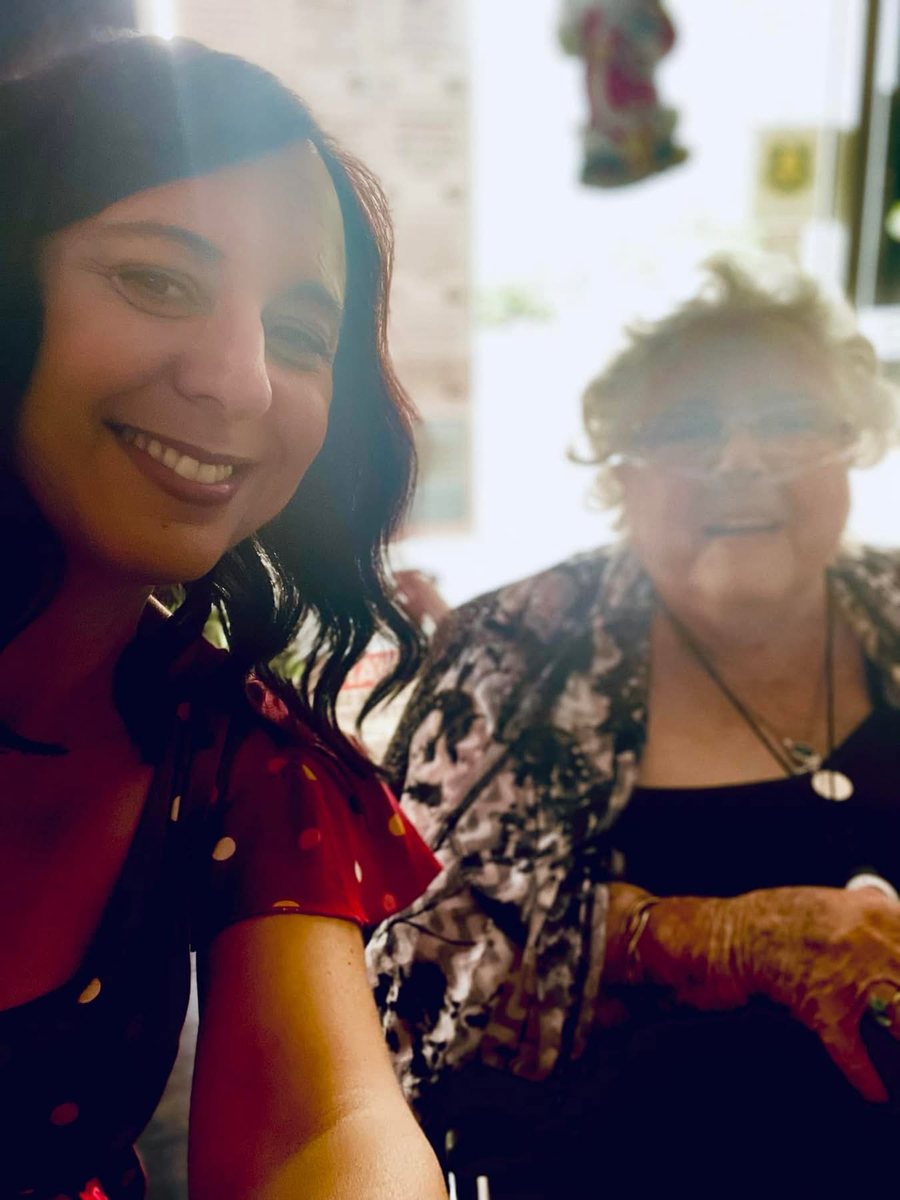
Fortunately, I had worn a red outfit when I saw her the Friday before she passed, something she remembered fondly as 'a vision in red'. I love that. In between being unable to speak or see very well at the end, she was still telling stories about us all, still found the energy to tell my son that she was still cranky she had never got to see his house (she hated missing out on anything). She made a joke that set us all laughing, and she managed that devilish chuckle of hers, and tried to tell another joke about some guy waking up in a coffin on the way to his own funeral, but her words slurred, and we didn't quite hear the punch line. But that didn't matter, because the point is she remained the Nan, Gran-nan, Mum, and Beryl Emma she had always been, to the very end. No compromise or defeat. And not alone. How remarkable is that, how bloody wonderful.
Some of you might have heard this story already, but five minutes after Nan had passed, as Mum was holding one hand and the Nurse was holding her other, Mum's phone rang. Mum's phone was on the cabinet behind her, and Nan's phone was on the other side of the cabinet. And when mum looked over her shoulder to see who was calling her? It was Nan. We took screenshots to prove it. Freaky, hey? And so like Nan, who was never one to let you go without delaying you to tell you just one more thing, to have you stay just five minutes longer. There was always more time she wanted to spend with you, more to share, more to make, more to give. More to live for.
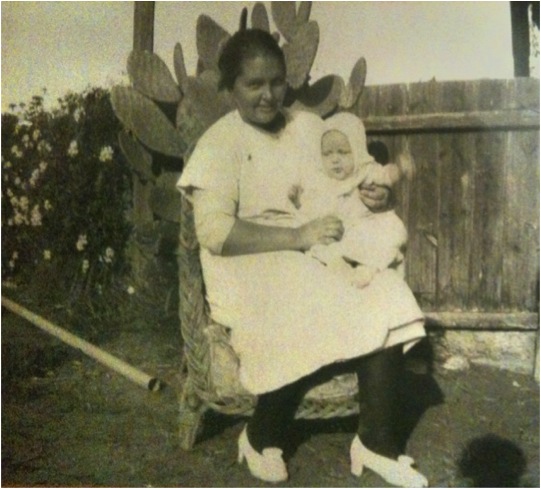
Beryl Emma Yard was the eldest daughter of what would eventually become a family of 10. On the Friday before she died, I was with her as she was recalling stories, in vivid detail, about her childhood; memories of when she was three and six, living with no electricity, on a farm in Murrayville. How she survived a dentist and his cavalier dispensation of chloroform to have her baby teeth removed, how she suffered with diphtheria when she was five. So sick her father put her in the back of the old Buick and rushed her to hospital where the doctor said she'd not likely live to the morning. Wasn't he wrong.
Nan's childhood, adolescence and young adult hood life was not easy, but she faced the challenges and demands of the situations with a big heart and a mission to protect her younger siblings as best she could. From as young as five, she managed much of the mothering duties of the household, cooking and washing and looking after her siblings, all the while attending school. She was bright and intelligent and won spelling bees. She was given a scholarship to Clarendon College in Ballarat, but she couldn't take it for a year because she was needed at home. She was told she could begin her study at home until she could join her cohort, but there was never enough time for sleep, nothing to write on or with and the only thing to read was 'The Truth'. This newspaper, she said, gave her quite the insight into the nature of divorce and the legalities involved, even if she never quite understood what 'adultery' was. She eventually went to Clarendon College and left at 17 when the war started. Then, in order to save the money she needed to start her nursing certificate, she cleared land and worked on a farm seven days a week for 20 shillings. She arrived in Pinnaroo to begin her training with everything she owned in the world; uniforms she had sewn, a small suitcase and 2 shillings and 6 pence.
The war was on, and life for nurses was tough. She worked 11–12 hour shifts, with no break, 28 nights straight at the end of which she was given 2–4 days off depending on the mood of the matron. She became engaged in Pinnaroo but knew that if she had married, it would have been the end of her nursing career, because she was yet to complete the additional 2 years training somewhere else to get her certificate. She chose her career and completed her training in Port Pirie.
Nan had two marriages in the years that followed and four daughters, Robyn, Marcia, Chiara and Lyn. Those were not easy marriages either, and Nan had to work and scramble and scrape to get the family by in days where there was no such thing as family benefits, and divorce, as she had learnt many years before while reading 'The Truth' was not easy for women. Nan was never one to give up. She always found a new path, a new way, a new hobby, new places to see. The experiences in her life gave her a sharp tongue at times, but an even sharper mind, a bigger heart, a more buoyant sense of humour. Nan's laugh and her sense of humour is what many of her family remember most about her. That devilish and delicious laugh came often and easily.
I was the first grandchild to come along, and I was followed by 7 granddaughters, 1 grandson, 14 great grandchildren and 2 great, great grandchildren. And, later, a whole family of neighbours she informally adopted.
Nan was intensely creative and loved to sew and knit and crochet and paint and she spent many hours passing these skills and passions on to her grand and great grandchildren. We have some of her paintings here today, but most have been given to people she has loved along the way of her life, along with jumpers and beanies and rugs and scarves. Nan loved to give and occupied much of her time, right up to the end, with working out how to make and give things to people. She died with a box of presents to be distributed to the staff at Dovetree.
Nan was such a wonderful grandmother to her grandchildren. She spent time with us, took us on holidays, sewed clothes for us, took us out to dinners and coffees—introduced me to the delights of Irish coffee in Rundle Mall one night before I was legally allowed the liquid gold of the Irish—sent us presents, came and stayed with us, cleaned our rooms. I sometimes wondered how it was that a woman born in the bush in the days of no electricity, and little else, who had never had an easy time of life could remain so open to finding the fun and adventure in life. For her whole life. But that was Nan. I think part of her secret was that she was a keeper and teller of stories, weaving the threads of the past into creations to be enjoyed and shared and remembered in the present.
Nan loved to tell the story of when her granddaughter, Sara, was about 4 years old. Nan asked Sara what horses do and Sara said 'Cnickttty Cnop, Cnikkety Cnop' because she couldn't pronounce the L. She used to laugh every time she told that story.
She delighted in telling the story of the time she came to stay with me when I was pregnant with Luke and Caleb was not quite 3. He was quite the company director, even then, and bossed Nan around 'right you'll be playing cricket with me now, so get that bat and hit'. They would play with the flubbery ball bouncing it and finding it all around the house. He really tired her out and she said 'Caleb if you tire me out like this I'm going to have to go home' and Caleb said 'Well, if you really want to go home, I'll take you. But you'll have to wait until I grow up so I can drive.'
When I was about 19 Nan was staying with us at Graceville and we lived in a 2 storey house. Mum and David had their bedroom under the house and the front stairs went past their room and were very creaky. And the sliding door was very noisy. They'd hear everything. So one night I'd been out and was home way later than my curfew. And I spent at least half an hour climbing up those stairs so carefully, then opening the sliding door ball-bearing by ball-bearing, only to find my Nan standing in the doorway, rolling her fingers with a big smile saying 'hello Belinda'. I got such a fright I screamed. She laughed. I could have been in bed half an hour earlier.
There are so many stories and memories I could share here. And I have no doubt we will continue her tradition and be reminding each other of them and keeping them alive for many years to come. Nan lived a rich life and as her physical health declined—much to her utter disgust—in her later years, much of her care fell to Marcia and David who were unfailingly supportive and she was so very lucky to have them.
A quick scan of the books Nan had on her shelf when she passed said a lot about her; books on birds and nature, art, the family history, books I had written, notebooks and one, quite small and easily missed. This one, 'Men, The Insufferable Sex'. Funny to the very end. When my youngest son was small, and Nan came to stay, it was always in his room. He was sometimes a bit put out by this, but Nan would always give him a $5 note and back in those days, Luke thought those notes were like gold. We found one in her drawer when we were cleaning out her room and I'm pretty sure that was meant for Luke.
But in all seriousness, Nan was so very much loved, and so loving. And she will be so very missed. She chose the music for the service today, so let us sing and laugh and tell stories in her honour. They don't make many women as formidable and fabulous as Beryl Emma Yard. She was as rare and precious as the gem for which she was named.
There was a special person in her life at one point, a man named Walter, or Wally, to us. She gave me many of his effects years ago, some cards she had kept, photos. His father had been a seaman and she had given him a card of a black ship sailing on a turbulent sea for his birthday one year. When he opened it he said, 'how did you know? It's the black ship of death. They come for all seamen when it's their time to die.' He did die, and she felt his loss deeply. So I'm going to finish with a poem from Sara Teasdale that Wally gave her that we found amongst her things. She loved the beach at Brighton which is where she lived for many years and where her beloved grandparents also lived.
If there is life when death is over
These tawny beaches will know much of me,
I shall come back, as constant and as changeful,
As the changing many coloured sea.
If life was small, if it has made me scornful,
Forgive me,
I shall straighten like a flame
In the great calm of death,
And if you ever need me,
Stand on the seaward dunes and call my name.
Archive — 2008
2008
Origins of One Long Thread
In 2008 I drove to the Bundaberg Writers Festival to meet with at literary agent in the hope of getting published. I had no idea that what would happen on the drive home would inspire my third novel, One Long Thread.
It was a long drive home and I began telling my friend, who was driving with me, about my family, especially my grandmother, who I had not seen for many years. The last we heard of her, I told my friend, was that she was running a caravan park in Hervey Bay. My friend turned off the highway and when I asked what she was doing, said, 'We're going to track down your grandmother.' She passed me the mobile phone and said, 'start calling caravan parks.'
The first caravan park I called was at Scarness. A man answered and I told him who I was and why I was calling. There was a pause. 'Jeez,' he said. 'That would make me your uncle. Mum would love to see you,' he said. 'She has leukemia.'
I knocked on the door of her small unit. A woman came to the door, the door opened. 'I know who you are,' she said. 'I know exactly who you are. I've been waiting for someone to come and find me.'
In her lounge room surrounded by her many craft projects, her oxygen tank and photograph albums, she began telling me some of the stories of her life. She had been forced to leave her children and my grandfather when my father, the eldest child, was ten. She apologized to me that day, saying she felt so bad for leaving, but feared for her life if she stayed.
I had always wanted to know about her heritage and I asked about her parents. 'I know almost nothing about them,' she said. 'They had no room for kindness. I found out I was pregnant at fifteen. My mother took my only winter coat, which was beige, and died it bright red. She gave me a small suitcase and put me on a train to marry your grandfather.'
Sometime after her funeral, I was paying with ideas for a novel when a friend asked why I didn't write about girls. I had no answer. I had been toying with a story about another boy, but her question made me think. The first thing that came to mind was a generation of women, all inevitably linked, and the story of that red coat, which begins this novel.
Archive — 2008
December 17, 2008
The Picture
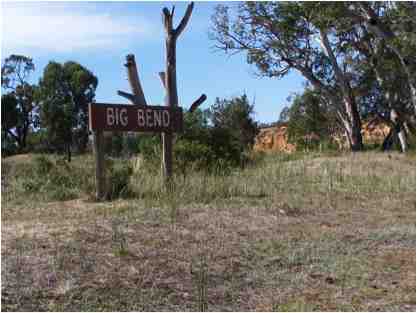
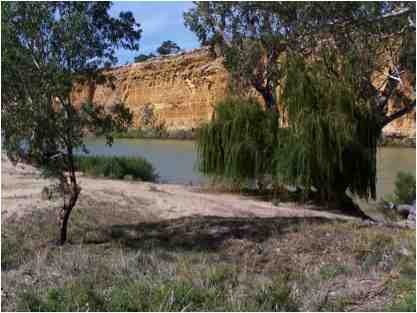
The picture that heads up my webpage was taken on the Murray River in Swan Reach, just down from my father's shack. There's something magical about that place for me. I used to go there for holidays when I was growing up. We'd have bon-fires and rip-roaring conversations, sing-a-longs and laughs. A lot of empty beer bottles were lined up beside the back door each night. During the day we'd go water skiing and boarding. We'd get the barbie smoking on dusk and watch the sun go down orange and shining across the cliffs opposite the river. Or we'd get the camp oven warmed up on the fire. Thousands of cocatoos would screetch across the sky like white rockets on sunset to nest in holes in the cliff and the water would sparkle like diamonds. Back then there was enough water in the river to hook up a sprinker and green up the grass. And fish. My brothers liked looking out for topless sunbakers on the small scrap of beach around the corer from our shack at a place called 'Big Bend'.
I could sit and watch the river and all her secrets and moods all day and well into the night. No matter what time of day it is, nature is alive with birds and insects and her private, soulful movements.
These memories are the stuff of stories and characters. Sometimes they form the backbones for a specific story in that place and time, and sometimes they're just the incense to take me into worlds beyond those I have ever lived. Life is sensual and words can take an experience of life, a moment in time, and make it last for a thousand years. When I write, that's the dream.
My novel, Big River Little Fish is set here, in Swan Reach on the Murray River in the Nineteen fifties. I'll leave you with an excerpt.
There's a place along the Murray River called Big Bend, down stream from the town of Swan Reach, halfway to Nildottie. And there in the middle, the river is hemmed in on one side by sandstone cliffs where Old Mother Murray decided to change direction one day, bending sharply around to the right instead of carving straight through. The cliffs stand tall in sections all along the water's edge, but there's nowhere else Old Mother Murray had to make a turn as sharp as that one.
Tom's Pa had turned off the main road, after crossing on the Swan Reach ferry, into Big Bend Road. The FJ Holden blew up sandstone dust like a smoke haze behind them, and Tom, sitting in the front seat next to his Pa, watched as the river appeared below them, ducking and weaving through the mallee scrub like a snake.
The Holden meandered along the makeshift road and, at times, depending on where the bends and curves took them, the river disappeared. Tom sat up straighter in his seat then, straining to catch another glimpse of her, his heart racing for fear she was gone altogether. And then the car turned and she was there again.
Tom had never seen water before. His Pa said, 'we'll have to fix that, Son.' He called Tom that from the beginning. Well, their beginning. Age seven beginning. 'Ain't nothing better than the Murray, neither. She's like the blood in your veins. Can't live without her, I reckon.'
Tom's Pa was a man of few words, but the words he spoke meant something. Tom liked to think he could remember them all and write them down one day so his Pa could be something permanent.
'I ain't always been someone you'd want to know, Son.' He said that straight away in the car the day Tom left his mother. 'I don't reckon your Mum would think there was much of me worth having from those days neither. But I'm changed, Son. And I mean to make amends.' And Tom, looking straight at him, knew it was true.